
Without dental insurance in Bridgeport, a new-patient exam, X-rays and cleaning typically costs $250 to $450. A routine cleaning after that runs $180 to $300. A tooth-coloured filling, $250 to $450. A crown, $1,300 to $2,200. An in-office membership plan reduces the routine numbers substantially.
NEEDS SIGN-OFF C-01, C-02, C-03, C-04, C-30 Costs stated here — new-patient exam + x-rays + cleaning $250–$450; routine cleaning + exam $180–$300; tooth-coloured filling $250–$450; crown $1,300–$2,200; membership plan — annual price + inclusions NO FIGURE — WE DO NOT KNOW THIS. Approve as written, or give the correction.
Those are the figures. You should not have had to read a thousand words to reach them, and on most dental websites you would not have reached them at all.
Why nobody publishes these numbers
It is worth understanding, because it explains why finding this out is so unreasonably hard.
Because prices vary, and a published number becomes a promise. This is the honest reason. A filling on a small cavity and a filling that wraps three surfaces of a molar are different pieces of work, and quoting one number for both is a way of being wrong.
Because most practices are in-network with insurers, and their fees are set by contract, plan by plan. There is no single price to publish, and there are contractual reasons not to.
And because uncertainty is commercially useful. A patient who does not know what things cost has to phone. A patient who phones can be booked. This is not a conspiracy; it is a default that nobody has any incentive to change.
The result is that the single most-asked question in dentistry — what will this cost me? — is the one question the entire industry declines to answer in public. So here is an answer, with ranges rather than promises, and with the honest caveat that your case may differ and a firm figure comes after an examination.
What a first visit costs
NEEDS SIGN-OFF C-01, C-02, C-03, C-15 Costs stated here — new-patient exam + x-rays + cleaning $250–$450; routine cleaning + exam $180–$300; tooth-coloured filling $250–$450; deep cleaning, per quadrant $300–$450. Approve as written, or give the correction.
$250 to $450 for a new patient, without insurance. That covers three things, and it is worth knowing what each is for:
- The examination. Not a glance. Every tooth, the gums, the bite, and any older work that may be failing quietly under a filling done twenty years ago. Also — and people forget this — a check of the soft tissue of your mouth, tongue and throat. That check is looking for oral cancer, and it is the reason a dental visit is a medical visit.
- X-rays. Usually a set of bitewings and sometimes a panoramic. Roughly half of the decay in an adult mouth is between the teeth, where it cannot be seen. Without X-rays, an exam is a partial exam.
- The cleaning. Removing the hardened deposit that a toothbrush cannot shift.
A routine cleaning and exam after that: $180 to $300, usually twice a year.
If it has been a very long time, expect the first cleaning to take longer, and possibly to be split over two appointments — and if there is gum disease, the treatment is a deep cleaning rather than a cleaning, at $300 to $450 per quadrant. That is a real difference and you should be told about it before it happens, not billed for it afterwards.
What routine care costs per year
NEEDS SIGN-OFF C-28, C-29 Costs stated here — routine care, per year $450–$800; two cleanings + exams a year $360–$600. Approve as written, or give the correction.
For a healthy adult with no problems, without insurance, in this area:
- Two cleanings and exams: $360 to $600
- X-rays, roughly once a year: $100 to $200
Call it $450 to $800 a year to stay healthy. That is the number to hold in your head, because everything below is what happens when you do not spend it.
What things cost when something goes wrong
NEEDS SIGN-OFF C-01, C-03, C-04, C-05, C-06, C-07, C-08, C-09, C-11, C-13, C-14, C-15, C-16, C-17, C-19, C-20, C-21, C-22, C-25, K-04 Costs stated here — new-patient exam + x-rays + cleaning $250–$450; tooth-coloured filling $250–$450; crown $1,300–$2,200; three-unit bridge $3,500–$6,000; root canal, front tooth $1,000–$1,400; root canal, molar $1,400–$2,000; simple extraction $200–$400; surgical extraction $400–$700; single implant, post+abutment+crown $4,000–$6,500; full denture, per arch $1,800–$3,500; partial denture $1,500–$2,800; deep cleaning, per quadrant $300–$450; take-home whitening trays $300–$500; in-office whitening $500–$800; composite bonding, per tooth $350–$750; porcelain veneer, per tooth $1,400–$2,500; invisalign, full case $4,500–$7,500; invisalign, limited case from around $3,000; emergency exam with x-ray $150–$250. Claims about the practice — Deep cleaning / scaling & root planing in-house. Approve as written, or give the correction.
These are typical ranges in this area, without insurance.
Repairing a tooth
- Tooth-coloured filling: $250 – $450
- Crown: $1,300 – $2,200
- Three-unit bridge: $3,500 – $6,000
- Root canal, front tooth: $1,000 – $1,400
- Root canal, molar: $1,400 – $2,000 — plus the crown that must follow it
Removing a tooth
- Simple extraction: $200 – $400
- Surgical extraction: $400 – $700
Replacing a tooth
- Single implant, post and crown together: $4,000 – $6,500
- Full denture, per arch: $1,800 – $3,500
- Partial denture: $1,500 – $2,800
Gums
- Deep cleaning (scaling and root planing): $300 – $450 per quadrant, and most people need two to four
[Cosmetic](/cosmetic-dentist-bridgeport) — never covered by any insurance, so these numbers are the numbers for everybody
- Take-home whitening trays: $300 – $500
- In-office whitening: $500 – $800
- Bonding: $350 – $750 per tooth
- Porcelain veneer: $1,400 – $2,500 per tooth
- Invisalign: $4,500 – $7,500, limited cases from around $3,000
[Emergency](/emergency-dentist-bridgeport)
- Emergency exam with an X-ray: $150 – $250, before whatever treatment follows
The cost of waiting — the arithmetic nobody shows you
NEEDS SIGN-OFF C-29 Costs stated here — two cleanings + exams a year $360–$600. Approve as written, or give the correction.
This is the most useful section in the article, and it is the one that makes the case for the $450 you did not want to spend.
Follow one tooth.
Year one. A small cavity between two molars. You have no symptoms — you cannot feel it and you cannot see it. An X-ray would find it. You are not having X-rays, because you are not going.
A filling now: $300.**
Year two. The decay reaches the dentine underneath and spreads sideways, because dentine is softer. Cold drinks twinge. You avoid that side.
A larger filling now: $450.**
Year three. Too little healthy tooth remains for a filling to be safe. It needs a crown.
A crown now: $1,800.**
Year four. The decay reaches the nerve. It aches at night. Then it aches all the time.
A root canal and a crown now: $3,400.**
Year five. The tooth abscesses. You are in an emergency appointment, in pain, being told the crack runs below the bone and it cannot be saved. It comes out. Then the gap: the tooth above starts to drift down, and the ones either side start to tilt in.
Extraction, bone graft and an implant: $5,500. Or the gap, and the slow consequences of the gap.
One tooth. Five years. $300 became $5,500 — and every step of that was a rational decision to not spend money today.
Two cleanings a year cost $360 to $600. That is what the arithmetic is really comparing, and it is why "I cannot afford the dentist" so often turns out, painfully, to mean "I could not afford it then, and now I am paying eighteen times as much."
Dental insurance, a membership plan, or paying cash?
NEEDS SIGN-OFF C-30 Costs stated here — membership plan — annual price + inclusions NO FIGURE — WE DO NOT KNOW THIS. Approve as written, or give the correction.
Dental insurance is not medical insurance, and this surprises people. A typical individual plan costs $300 to $600 a year in premiums, has an annual maximum of $1,000 to $2,000 — a cap that has barely moved since the 1970s — plus a deductible and a waiting period of six to twelve months before it covers anything substantial.
Which means: for routine care it broadly pays for itself. For a crown it helps. And for the thing you actually fear — the implant, the multiple crowns, the year everything goes wrong — it runs out. A $5,000 implant against a $1,500 annual maximum leaves you paying $3,500 or more regardless.
An in-office membership plan is a different animal entirely. You pay the practice directly, once a year. Your routine preventive care is included and everything else is reduced.
It is not insurance, and that is the point:
- no deductible
- no annual maximum — nothing runs out in October
- no waiting period — it works on day one
- no claim form, and no company deciding your treatment is not medically necessary
For a person with no dental coverage who intends to look after their teeth, a membership plan is very often cheaper than an individual insurance policy, and considerably less irritating. Ask any practice whether they have one. Many do not. It costs nothing to ask.
Paying as you go, visit by visit is a perfectly reasonable third option — provided you actually come. The failure mode is not the money. It is the four years of not booking.
What "out-of-network" actually means for your bill
NEEDS SIGN-OFF K-10 Claims about the practice — Out-of-network with most plans; we help with claims. Approve as written, or give the correction.
Since Radiant Smiles is currently an out-of-network provider with most plans, we should explain the term rather than hide behind it.
It means the practice has not signed a contract with your insurer setting the fees it may charge. It does not mean your plan is useless.
Most PPO dental plans include out-of-network benefits and will still pay a share of your treatment. What changes is that the share is often smaller, and that with some plans you pay the practice and are reimbursed, rather than the other way round.
The only number that matters is what you personally end up paying. Any practice worth going to will work that out with you before you agree to treatment. Call with your plan details and ask. And if the answer is that your plan makes a particular practice too expensive for you — that is a legitimate outcome of a phone call, and a good practice will tell you so rather than book you anyway.
Financing, and doing it in stages
NEEDS SIGN-OFF K-11 Claims about the practice — Cherry and Sunbit financing offered. Approve as written, or give the correction.
Cherry and Sunbit spread treatment over monthly payments; applying takes a few minutes.
Timing around a plan year. If you do have insurance with an annual maximum, treatment spanning December and January can draw on two years of benefit. This is legitimate, it is common, and hardly anybody thinks of it.
And the option nobody advertises: do it in stages. A treatment plan is a list, not a bill. If the whole list is unaffordable this year, say so, out loud, in the office. Ask which items are urgent, which can safely wait six months, and which can wait two years. A dentist who cannot answer that is not thinking about you.
The thing we would ask is that you have that conversation with us rather than quietly not booking. Silence is the expensive option.
If we are too expensive — where else to go in Bridgeport
NEEDS SIGN-OFF K-12 Claims about the practice — HUSKY / CT Medicaid NOT accepted. Approve as written, or give the correction.
This section is against our commercial interest and it belongs here anyway. If you genuinely cannot afford private dental care, these exist and you should use them.
Community health centres. Bridgeport is served by federally qualified health centres that provide dental care on a sliding scale based on income. They will see you whether or not you can pay the full amount, and they are legally required to. Waiting times can be long, so call early rather than in a crisis.
Dental school and hygiene programme clinics. Treatment is performed by students under close supervision by qualified faculty. Appointments take substantially longer — a filling can be a three-hour visit — and the cost is typically a fraction of private fees. For cleanings in particular, a hygiene programme is excellent value.
HUSKY (Connecticut Medicaid). If you are eligible, HUSKY covers dental care and there are practices in Bridgeport that accept it. Radiant Smiles does not, and we would rather tell you that plainly here than have you call, hope, and be turned away.
Call 2-1-1. Connecticut's 211 service is free, confidential, and will point you at the dental resources you are actually eligible for. It is the single most useful phone number in this article for anyone in genuine financial difficulty.
And if you are in pain right now and have no money: go anyway. Call a practice, explain the situation, and ask what can be done to get you out of pain today. An infection that spreads into the face is a hospital admission, and it is a great deal more expensive than the extraction that would have prevented it.
What a dental plan actually covers, in plain terms
If you are weighing whether to buy insurance, you need to understand the structure, because it is not intuitive and it is not like medical cover.
Most plans work on a 100 / 80 / 50 structure:
- Preventive — 100%. Cleanings, exams, X-rays. Usually covered in full, often without the deductible applying.
- Basic — 80%. Fillings, simple extractions, and sometimes root canals. You pay 20%.
- Major — 50%. Crowns, bridges, dentures, and often root canals. You pay half.
Then three things claw it back:
- The deductible. Typically $50 to $100 a year before anything but preventive is paid.
- The annual maximum. Typically $1,000 to $2,000 — a cap that has barely moved since the 1970s, while dentistry has not become cheaper. This is the number that matters, and it is the one nobody reads. A single crown and a root canal can exhaust an entire year's benefit.
- The waiting period. Six to twelve months before major work is covered on a new individual policy. You cannot buy a plan in March because you need a crown in April.
And most plans cover nothing at all for: whitening, veneers, and other cosmetic work — ever, on any plan. Many cover implants and adult orthodontics poorly or not at all.
So the honest summary: dental insurance is very good at making routine care feel free, moderately useful for a filling or a crown, and close to irrelevant for the expensive thing you are actually afraid of.
Insurance, discount plans, and membership plans — three different animals
NEEDS SIGN-OFF C-30 Costs stated here — membership plan — annual price + inclusions NO FIGURE — WE DO NOT KNOW THIS. Approve as written, or give the correction.
These get confused constantly, and they are not the same.
Dental insurance. You pay a premium; a third party pays a share of your bill, subject to a deductible, an annual maximum and waiting periods. Someone else decides what is "medically necessary."
A dental discount plan. You pay an annual fee to a company, which has negotiated reduced fees with a network of dentists. It pays nothing toward your treatment — it simply gets you a lower price, at practices inside its network. It is not insurance, and it is often marketed as if it were. Read carefully, and check the dentist you actually want to see is in it before you pay.
An in-office membership plan. You pay the practice directly, once a year. Your preventive care is included and other treatment is reduced. No deductible, no maximum, no waiting period, no claim, and nobody between you and your dentist.
For a person with no coverage who intends to look after their teeth, the third is very often the least expensive and by some distance the least annoying. Ask any practice whether they have one. Many do not. It costs nothing to ask, and it is the question that most reliably saves people money.
Ten things that cost nothing and save you thousands
NEEDS SIGN-OFF K-18 Claims about the practice — Custom mouthguards / night guards from a scan. Approve as written, or give the correction.
Prevention is not a lecture here. It is the highest-return financial advice in this entire article.
- Clean between your teeth, every day. Floss, interdental brushes, a water flosser — whichever you will actually use. Brushing alone cleans about three-fifths of each tooth. Most decay and virtually all gum disease starts in the other two-fifths.
- Brush at the gum line, angling the bristles into the join between tooth and gum. That junction is where gum disease lives and it is the exact spot people skip because it is tender.
- Use a fluoride toothpaste, and spit — do not rinse. Rinsing washes the fluoride straight out. This costs nothing and it is one of the highest-value habits in dentistry.
- Stop grazing. It is not the quantity of sugar that causes decay so much as the frequency of exposure. Every sweetened coffee, every biscuit, restarts an acid attack that lasts twenty to thirty minutes. Six snacks a day is six attacks. The same amount of sugar eaten at once, with a meal, does far less harm.
- Water between meals. Not juice, not soda, not sports drinks, not sparkling flavoured water — all of which are acidic even when sugar-free, and erode enamel directly.
- Do not brush immediately after anything acidic. Wait half an hour. Brushing softened enamel scrubs it away.
- If you grind, get a night guard. It costs a few hundred dollars and it prevents the cracked cusps and split teeth that cost thousands.
- Stop smoking. It is the single strongest modifiable risk factor for losing your teeth to gum disease, and it also masks the bleeding that would have warned you in time.
- Do not ignore [bleeding gums](/blog/why-are-my-gums-bleeding). Skin does not bleed when you wash it. Bleeding means inflammation, inflammation caught early is completely reversible, and inflammation ignored destroys the bone that holds your teeth in.
- Go before it hurts. By the time a tooth hurts, the $300 option has usually already expired.
How to talk to a dentist about money
Most people find this harder than the drill. Here is how to make it easy.
Say it first, and say it plainly. "Before we start — I have no insurance, and I need to know what things cost." Any decent practice will simply answer.
Ask for the treatment plan in writing, with prices, before you agree to anything.
Ask: "What has to happen now, and what can wait?" This is the single most valuable question in dentistry and hardly anyone asks it. There is nearly always a difference between urgent and ideal.
Ask: "Is there a cheaper option that would work, and what am I giving up if I take it?" Sometimes the answer is a filling instead of a crown, and a frank warning that it may not last as long. That is a legitimate trade and you are entitled to make it.
Ask what happens if you do nothing. A dentist who cannot answer that clearly is selling rather than advising.
The one thing that saves the most money
NEEDS SIGN-OFF C-30 Costs stated here — membership plan — annual price + inclusions NO FIGURE — WE DO NOT KNOW THIS. Approve as written, or give the correction.
It is not a coupon, and it is not shopping around.
It is turning up twice a year. Everything expensive in this article — the crown, the root canal, the implant — began as something small and symptomless that would have been found on an X-ray and fixed for a few hundred dollars.
The least expensive dentistry in the world is the dentistry you do before it hurts. By the time a tooth hurts, the inexpensive option has usually already expired.
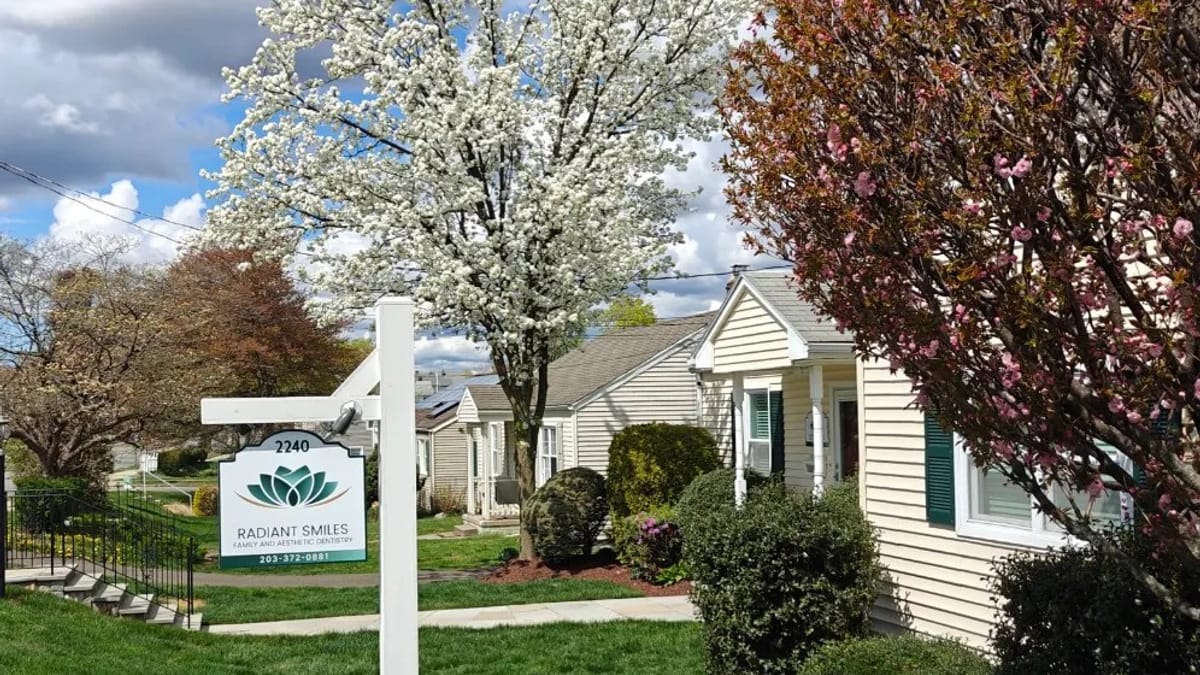
Radiant Smiles is accepting new patients in Bridgeport's North End, publishes its cost ranges, and offers an in-office membership plan for patients without dental insurance. Cost, insurance and what a first visit involves, or call (203) 372-0881. And if the honest answer is that you should go somewhere cheaper, we will tell you that too.
This article is educational. All figures are typical ranges for this area, not quotations, and your case may differ — a firm figure follows an examination. Prices change; this article is dated.