
Teeth Whitening in Bridgeport, CT
Radiant Smiles offers professional teeth whitening in Bridgeport, both in-office and with custom take-home trays. Results and cost depend on what is causing the staining, which Dr. Jasmeet Kaur, D.D.S. checks before anything begins, at 2240 Madison Avenue.
That check is the whole point of having it done by a dentist, and it is the part the drugstore cannot do.

First: will whitening even work on your teeth?
NEEDS SIGN-OFF K-17 Claims about the practice — Internal bleaching offered. Approve as written, or give the correction.
Some staining bleaches beautifully. Some does not bleach at all, and no amount of gel, strips, or repeat sessions will change that.
Whitening works well on the yellowing that comes with age, and on surface stain from coffee, tea, red wine, cola and tobacco. This is most people.
Whitening does not work on grey discolouration from certain antibiotics taken in childhood, on a single dark tooth that has died after an injury, or on white or brown mottling from fluorosis. Those need bonding, internal bleaching, or veneers — and being told this on day one saves you three rounds of a product that was never going to help.
Whitening does nothing at all to porcelain or composite. Crowns, veneers and bonding do not bleach. So if you have a crown on a front tooth and you whiten everything around it, that crown will suddenly look darker than its neighbours. This is worth planning before you whiten, not discovering afterwards.
In-office or take-home?
In-office takes about an hour, uses a stronger gel under supervision, and you leave with the result. It suits people who want it done by a date — a wedding, a photograph, an interview.
Custom take-home trays are moulded from a digital scan of your teeth, so the gel sits against the tooth and not against your gums. You wear them for a set period each day for a week or two. The result arrives more gradually, sensitivity is easier to control, and you keep the trays — which means topping up for a night or two in a year's time costs you a tube of gel rather than another appointment.
Many people do both: in-office to get there, trays to stay there.
Does it damage enamel? An honest answer.
Used as directed, professional whitening does not damage enamel. This is one of the better-studied questions in dentistry.
What it commonly does cause is temporary sensitivity — sharp, short-lived twinges, usually for a day or two, sometimes for the duration of the course. It settles. A desensitising gel, a lower concentration, or shorter wear times manage it, and that management is precisely what supervision buys you.
The real risk lies elsewhere: unsupervised, high-strength product bought online and used for far longer than the instructions say, in a tray that does not fit and leaks onto the gums. That is a genuine way to burn soft tissue and strip enamel, and it happens.
Strips from the drugstore
They work, for mild surface staining, and we will tell you so.
If your teeth are basically fine and you want them a shade or two brighter, buy the strips. It is a reasonable place to start and it costs you thirty dollars. There is no version of dentistry worth practising in which we sell you an $800 treatment to solve a $30 problem.
Professional whitening is stronger, gets an even result across teeth that are not all the same shade to begin with, and is supervised. And it starts with a dentist checking whether your particular staining is the kind that responds at all — which, as above, is the question that actually decides everything.
Who should not whiten, or should wait
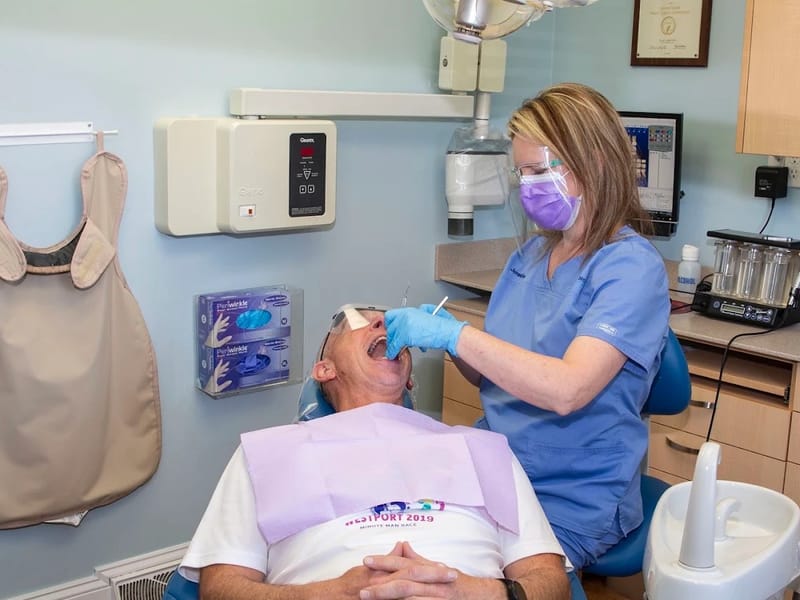
A dentist checking this first is the reason to have it done properly.
Wait if you have untreated decay or [gum disease](/gum-disease-treatment-bridgeport). Bleaching gel reaching a cavity or inflamed gums is genuinely painful, and it treats nothing. Fix the problem, then whiten. This is by far the most common reason we ask someone to wait.
Wait if you are planning crowns, veneers or bonding on your front teeth. Whiten first, let the shade settle for a couple of weeks, and then match the restoration to the new colour. Doing it the other way round means the new work is the wrong shade the moment you bleach.
We do not whiten during pregnancy or breastfeeding. There is no good evidence of harm, and there is no good evidence of safety either — and this is elective. It can wait.
Not for children. Whitening is for fully developed adult teeth.
And if your teeth are already very sensitive, say so. It changes the concentration and the schedule, not the answer.
What it costs
NEEDS SIGN-OFF C-16, C-17, C-30 Costs stated here — take-home whitening trays $300–$500; in-office whitening $500–$800; membership plan — annual price + inclusions NO FIGURE — WE DO NOT KNOW THIS. Approve as written, or give the correction.
In this area, in-office whitening usually runs $500 to $800. Custom take-home trays with professional gel run roughly $300 to $500.
Whitening is cosmetic, so no dental plan covers it — anywhere, on any plan. It is the least expensive way into cosmetic dentistry and, for a great many people, it turns out to be all they actually needed. Cost, financing and the membership plan.
Call (203) 372-0881.
Ranges, not quotations. What your treatment costs depends on what you actually need, and you will be given a firm figure after an examination — before anything begins.
Related care
Cosmetic Dentistry
Porcelain veneers, professional whitening, tooth-coloured bonding and clear aligners. Dr. Kaur reviews the options and the cost at a consultation.
Learn more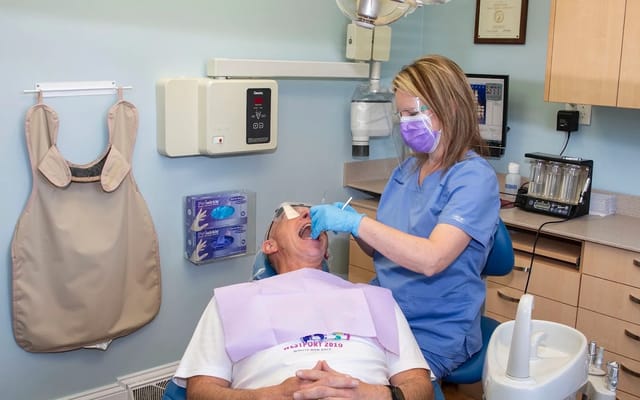
Dental Bonding
A chipped, cracked or gapped tooth repaired with tooth-coloured composite resin, usually in a single visit. From roughly $350 per tooth.
Learn more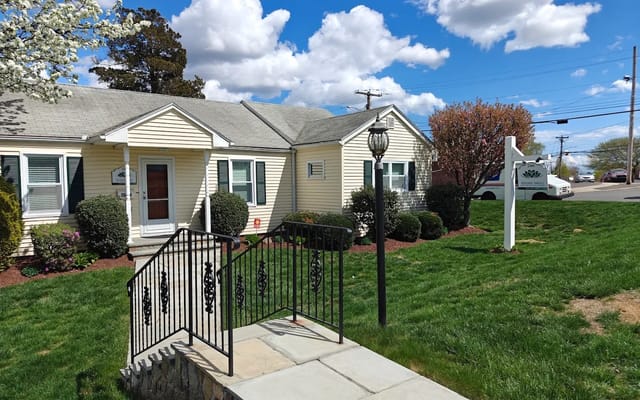
Porcelain Veneers
Thin custom porcelain shells bonded to the front of teeth to change shape, colour or alignment. Irreversible, and quoted per tooth after a consultation.
Learn moreFrequently asked questions
Does teeth whitening damage enamel?
The long answer: Professional Whitening or Drugstore Strips? An Honest Answer
How long does whitening last?
Is professional whitening better than strips?
The long answer: Professional Whitening or Drugstore Strips? An Honest Answer
How much does teeth whitening cost?
The long answer: Professional Whitening or Drugstore Strips? An Honest Answer
Will whitening work on my crowns or veneers?
Book with a dentist who will tell you when you do not need the treatment
Dr. Jasmeet Kaur, D.D.S. publishes her cost ranges, explains the cheaper option first, and says plainly when the honest answer is to do nothing. Accepting new patients, including children.