
Root Canal Treatment in Bridgeport, CT
A root canal at Radiant Smiles in Bridgeport removes infected pulp from inside a tooth so that the natural tooth can be kept. The tooth is numbed thoroughly first, and most patients describe the appointment as similar to having a filling. Dr. Jasmeet Kaur, D.D.S., 2240 Madison Avenue.
We are answering the question you actually came here with, first.
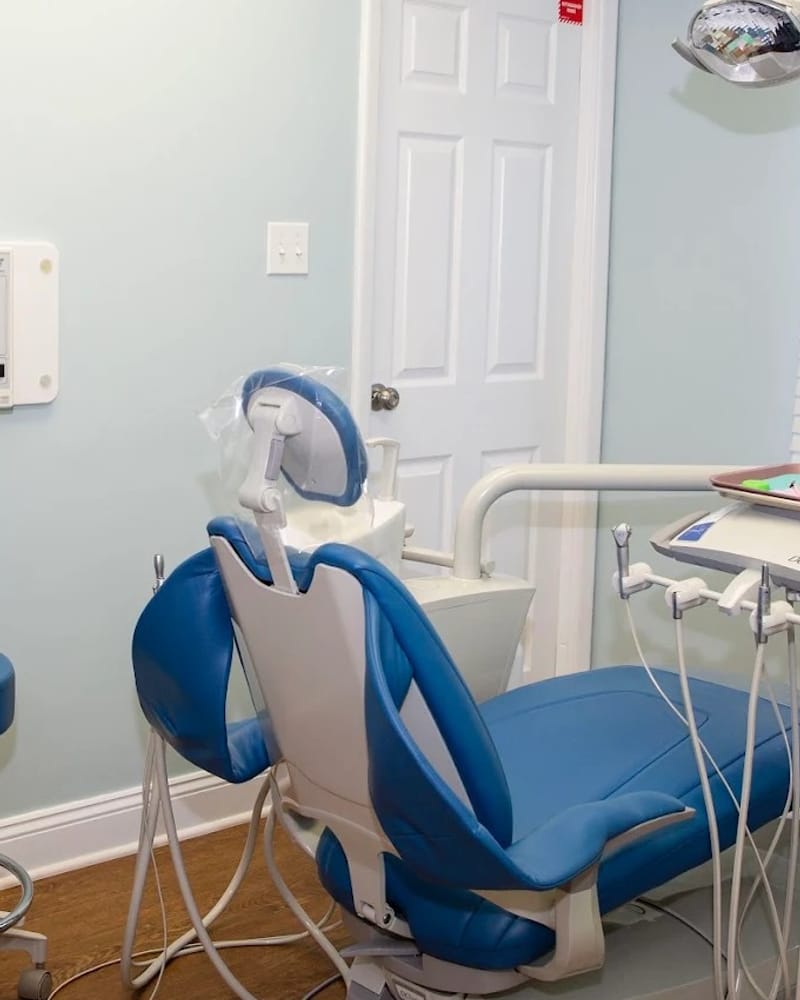

"Does it hurt?"
NEEDS SIGN-OFF K-06 Claims about the practice — Nitrous offered; IV / general sedation NOT offered. Approve as written, or give the correction.
No — and the reason people believe otherwise is worth explaining, because it is a misunderstanding that costs a great many people their teeth.
The pain everybody associates with root canals is the pain of the infection that made the root canal necessary. A dying nerve inside a tooth is one of the worst pains in medicine. The treatment is what stops it. Blaming the root canal for that pain is like blaming the ambulance for the accident.
The appointment itself: the tooth is numbed, thoroughly, and Dr. Kaur checks that you are numb and waits until you say so. Then it is a long appointment during which not much happens to you. Most people find the tedium harder than the sensation. If the idea of the appointment is the obstacle, nitrous oxide sedation is available and this is exactly what it is for.
Afterwards the tooth is tender for a few days — bruised, rather than painful — and over-the-counter painkillers handle it.
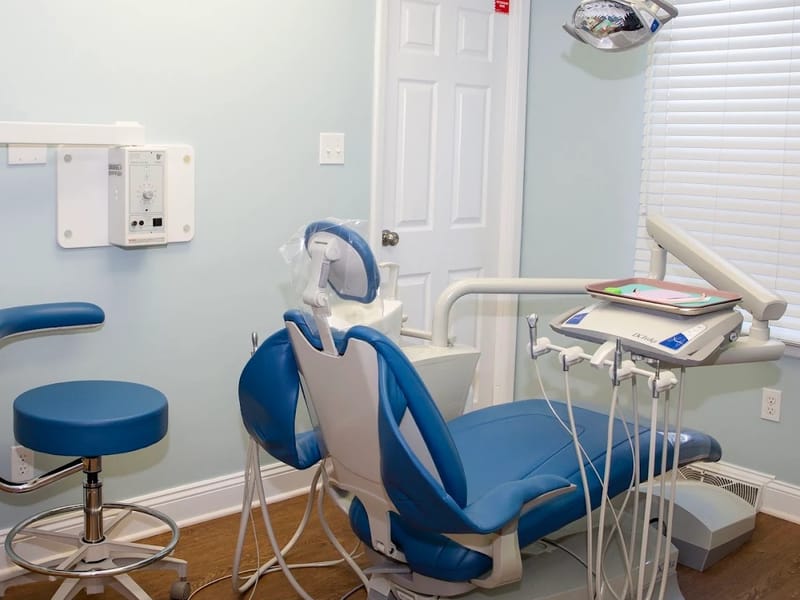
What is actually happening in there
Inside every tooth is a chamber of soft tissue — nerve and blood vessels. When deep decay, a crack or an injury lets bacteria reach it, that tissue becomes infected and dies. It cannot heal on its own, and the infection will spread into the bone at the root tip, forming an abscess.
A root canal cleans that chamber out, disinfects it, shapes the canals, and seals them. The tooth is dead afterwards, which is fine — a tooth does not need a nerve to chew. It needs a root, and a root canal is how you keep one.
Often one appointment. Sometimes two, if there is active infection to settle first.
The crown afterwards is not optional
On a back tooth, almost always.
A root-treated molar is brittle. It has been hollowed out and it takes the heaviest chewing force in your mouth. The single most common way people lose one is to skip the crown, split the tooth six months later, and lose both the tooth and the money spent saving it.
So budget for the crown. It is part of the treatment, not an addition to it, and any quote that omits it is not a real quote. On a front tooth with little damage, a filling is sometimes genuinely enough, and Dr. Kaur will say so when it is.
Root canal or extraction?
NEEDS SIGN-OFF C-05, C-10, C-11, C-24 Costs stated here — three-unit bridge $3,500–$6,000; extraction (quoted as one range) $200–$700; single implant, post+abutment+crown $4,000–$6,500; root canal + crown, total $2,400–$4,200. Approve as written, or give the correction.
Pulling it is cheaper today and more expensive later. That is the entire trade, and here it is with the numbers.
Root canal + crown: roughly $2,400 to $4,200 all in. You keep your own tooth, its root, the bone around it, and the teeth either side stay where they are.
Extraction: $200 to $700 today. Then you choose between a gap, a bridge at $3,500 to $6,000 that requires cutting down two healthy teeth, or an implant at $4,000 to $6,500 and six months. Or you leave the gap, and the tooth above drifts down, the teeth either side tilt in, and in five years the problem is bigger.
Sometimes the tooth genuinely cannot be saved — the crack runs below the bone, or too little tooth remains to hold a crown. When that is the case Dr. Kaur will say so plainly, and recommend [the extraction](/tooth-extraction-bridgeport) rather than take your money for treatment that will fail.
What it costs
NEEDS SIGN-OFF C-04, C-06, C-07, K-11 Costs stated here — crown $1,300–$2,200; root canal, front tooth $1,000–$1,400; root canal, molar $1,400–$2,000. Claims about the practice — Cherry and Sunbit financing offered. Approve as written, or give the correction.
In this area, a root canal typically runs $1,000 to $1,400 on a front tooth and $1,400 to $2,000 on a molar, because a molar has more canals to find and clean. The crown afterwards typically runs $1,300 to $2,200.
Most dental plans do contribute toward root canal treatment — it is restorative, not cosmetic. Radiant Smiles is currently out-of-network with most plans, and we will find out what yours pays before we begin. Financing through Cherry and Sunbit is available. The full picture.
Complex cases — a retreatment, or unusually curved or calcified canals — may be referred to a dentist who does nothing but this work. We will tell you if yours is one, rather than start something we should not.
In pain now? Call (203) 372-0881.
Ranges, not quotations. What your treatment costs depends on what you actually need, and you will be given a firm figure after an examination — before anything begins.
Related care
Crowns, Bridges & Fillings
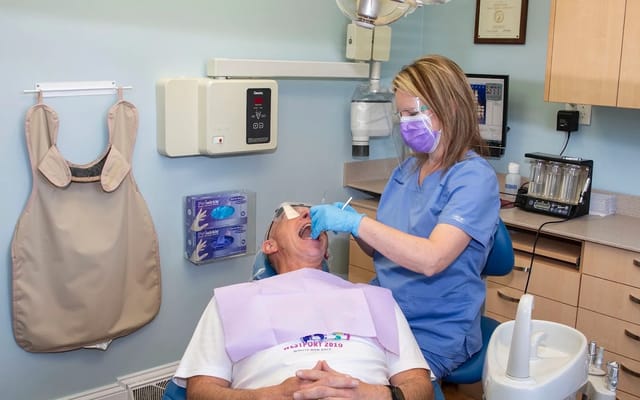
Tooth-coloured fillings, crowns and bridges. Dr. Kaur recommends the option based on how much of the natural tooth is left to work with.
Learn more
Emergency Dentistry
Same-day appointments for severe tooth pain, a broken or knocked-out tooth, swelling, or a lost crown. Call (203) 372-0881.
Learn more
Tooth Extraction
Simple and surgical extractions when a tooth cannot be saved. Complex or deeply impacted wisdom teeth may be referred to an oral surgeon.
Learn moreFrequently asked questions
Does a root canal hurt?
How much does a root canal cost?
Should I have a root canal or just pull the tooth?
The long answer: Root Canal or Extraction? How the Decision Is Actually Made
How many appointments is a root canal?
Do I have to get a crown afterwards?
The long answer: Root Canal or Extraction? How the Decision Is Actually Made
Book with a dentist who will tell you when you do not need the treatment
Dr. Jasmeet Kaur, D.D.S. publishes her cost ranges, explains the cheaper option first, and says plainly when the honest answer is to do nothing. Accepting new patients, including children.