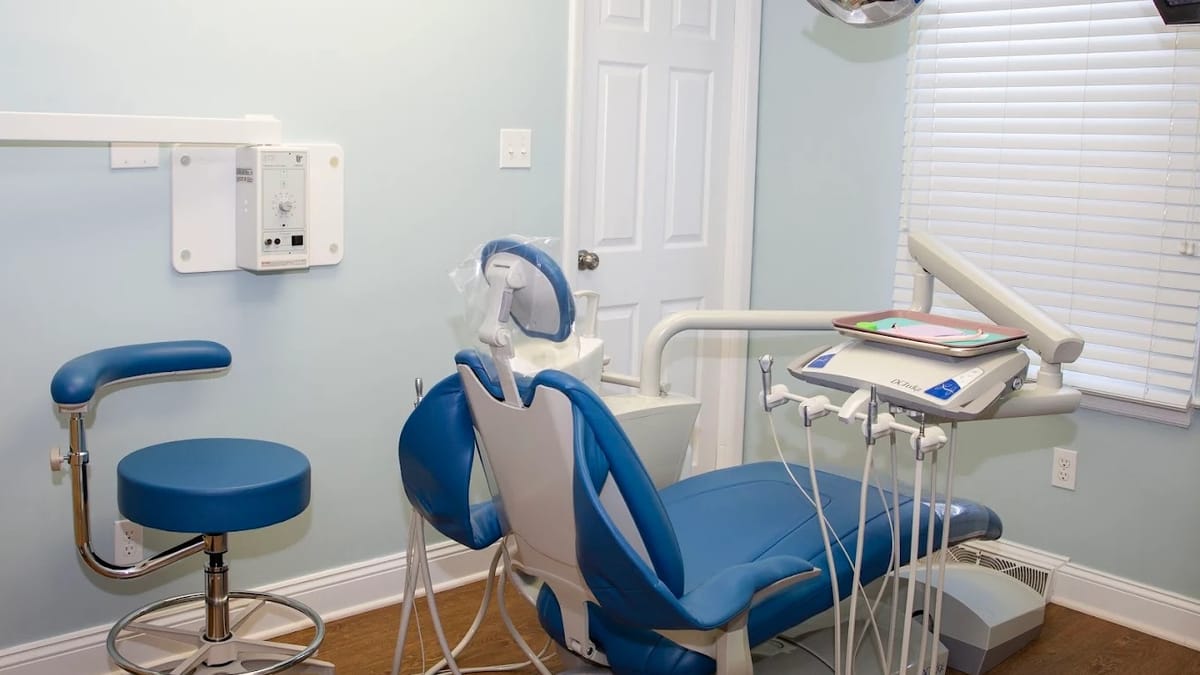

Nitrous oxide — laughing gas — is a mixture of nitrous oxide and oxygen breathed through a small mask over your nose. It produces a light, warm, floaty calm within a few minutes. You stay awake, aware, and able to talk the whole time, and it clears within five to ten minutes at the end, so you can usually drive yourself home.
If you have not seen a dentist in five, ten or twenty years, this article is for you. It is going to be honest about all of it, including the parts that are not comforting.
You are not unusual, and it is not a character flaw
Somewhere between one in three and one in five adults reports meaningful anxiety about dental treatment. A smaller but very substantial group — several percent of the population — avoids the dentist entirely, for years, because of it.
That is millions of people. It is not a quirk and it is not weakness.
And here is the part that matters more: people do not avoid the dentist because they are careless. In nearly twenty years I have not met the patient who simply could not be bothered. What I meet, over and over, are people who were made to feel judged, or rushed, or who had something painful done to them by someone who did not stop when they raised a hand — usually when they were seven years old.
That is not carelessness. That is an entirely rational response to a bad experience, and the fact that it is now costing you your teeth does not make it irrational; it makes it expensive.
Where the fear actually comes from
It helps to be specific, because specific fears have specific solutions.
Pain, or the memory of it. Very often a childhood filling done before the anaesthetic had properly worked. Dentistry in the 1980s was frequently not gentle.
Loss of control. You are reclined, immobilised, with your mouth open, unable to speak, while someone works on your face with instruments you cannot see. That is a rational thing to dislike. It has nothing to do with teeth.
Shame. This one is enormous and almost never named. People who have not been for a decade are frequently not afraid of the drill at all — they are afraid of being told off. Of the sharp intake of breath. Of a hygienist saying "well, this has been let go, hasn't it."
The sounds and smells. The drill's pitch. The particular smell of a dental office. These are powerful memory triggers and they can produce a physical response before anything has even happened.
Needles. Specific, common, and manageable.
Gagging. A real, involuntary, humiliating problem — and one that digital scanning has substantially solved, because there is no longer a tray of impression material to sit through.
Naming which of those is yours changes the appointment. A person afraid of pain needs a different visit from a person afraid of being judged.
What nitrous oxide is, and what it is not
What it is: a colourless gas, mixed with oxygen and breathed through a soft nose mask. It has been used in dentistry for well over a century — it is one of the oldest and most studied agents in the field. The dose is adjusted moment to moment by the dentist, and it is the only form of sedation whose effect can be turned up, turned down, and switched off within minutes.
What it is not: it is not general anaesthetic. You are not "put under". You do not lose consciousness, you do not lose your memory of the appointment, and you are not unable to respond. Anyone describing nitrous as "sleep dentistry" is misleading you.
It also does not replace the local anaesthetic. You will still be numbed. Nitrous makes you not mind; the local injection is what makes you not feel. They do different jobs and you generally have both.
What it actually feels like, minute by minute
The first minute. The mask goes over your nose. It is soft and it is small, and you breathe normally through it. Nothing happens yet. Most people report that the smell is faintly sweet, or of nothing at all.
Two to three minutes in. A warmth, usually starting in the hands and feet. Then a lightness. People reach for different words — floaty, fuzzy, buoyant, like the first few seconds of falling asleep and then staying there. Some describe a slight tingling in the fingertips.
Five minutes in. The characteristic effect, and it is oddly hard to convey: you are still perfectly aware of everything that is happening — and it has stopped mattering. You can hear the drill. You know what it is. You simply are not troubled by it. Time compresses; a forty-minute appointment feels like fifteen.
Some people become talkative. Some giggle, which is where the name came from. Most just sit there feeling pleasantly heavy and slightly amused.
Throughout. You can talk. You can raise a hand and we stop. You can say "turn it down" and within two or three breaths it is turned down. That control is not a formality — it is the entire mechanism, and it is why nitrous works so well for people whose real fear is helplessness rather than pain.
The last five minutes. You breathe pure oxygen. The nitrous washes out of your system quickly, because it is not metabolised — it simply leaves through your lungs. The floaty feeling recedes.
Afterwards. Most people feel completely normal within five to ten minutes. A minority feel briefly tired, or slightly nauseous — usually those who ate a heavy meal beforehand, which is why we suggest you do not.
Is it safe? Who should not have it
Nitrous oxide is among the safest agents used in dentistry, which is why it is given to children routinely.
It is not right for everyone, and you should be told so plainly:
- Pregnancy. Generally avoided, particularly in the first trimester. There is no strong evidence of harm, and there is no strong evidence of safety, and this is elective. It can wait.
- Significant respiratory disease — COPD, severe emphysema. Nitrous is breathed, and if your breathing is compromised it may not be appropriate.
- A blocked nose. Very practical, and it defeats the whole thing: if you cannot breathe through your nose, you cannot receive it. Reschedule if you have a heavy cold.
- Vitamin B12 deficiency. Nitrous interferes with B12 metabolism. A single dental exposure is not a concern for most people, but if you have a known deficiency or pernicious anaemia, say so.
- Some psychiatric conditions and certain recent eye surgeries. Tell us your full history, and mention every medication, including the ones you think are irrelevant.
- Bleomycin chemotherapy and a few other specific situations.
Tell your dentist everything. Not the edited version. The list of medications is not a formality — it is the thing that keeps this safe.
Can you actually drive home?
Usually, yes — and this is the practical difference between nitrous and every heavier form of sedation.
Because the gas is exhaled rather than metabolised, it leaves quickly. After a few minutes of pure oxygen, most people are back to baseline. Your dentist should check that you feel entirely normal before you leave — and if you do not, you sit there until you do. There is no schedule that matters more than that.
With oral or intravenous sedation, by contrast, you need someone to collect you, you cannot drive for the rest of the day, and you lose the afternoon. Nitrous lets you have a filling at 8:00 a.m. and be at your desk by nine.
What it costs
NEEDS SIGN-OFF C-26 Costs stated here — nitrous oxide, per visit $75–$150. Approve as written, or give the correction.
In this area, nitrous oxide typically runs $75 to $150 per visit, usually added to the cost of the appointment rather than billed as a separate treatment.
Some dental plans cover it for certain procedures. Many do not, and treat it as elective. You should be given the figure before the appointment rather than after it — and if a practice will not tell you what it costs until you are in the chair, that tells you something.
The other kinds of sedation, and why we do not offer them
NEEDS SIGN-OFF K-06 Claims about the practice — Nitrous offered; IV / general sedation NOT offered. Approve as written, or give the correction.
Honesty about scope matters here, because getting this wrong is dangerous.
Oral sedation — a tablet, usually a benzodiazepine, taken before the appointment. Deeper than nitrous. You will be drowsy, you will remember little, and you cannot drive. Someone must bring you and take you home.
IV sedation and general anaesthesia — administered intravenously, monitored, sometimes in a hospital setting. This is what people usually mean by "sleep dentistry". It requires specific training, specific equipment and specific licensing.
Radiant Smiles offers nitrous oxide. We do not offer IV or general sedation, and we will not describe nitrous as though it were the same thing.
If your anxiety is severe enough that nitrous will not be sufficient — and for some people it genuinely is not — you should be told that, and referred to someone who can help. Being talked into an appointment that goes badly is how a ten-year gap becomes a twenty-year one.
Coming back after ten years: what the first visit is actually like
Here is what I would suggest, and it is not what most people expect.
Come in for nothing. Book an appointment where no treatment happens. You sit upright, in your own clothes, and you talk. No instruments. No mirror in your mouth. No commitment. You tell me what frightens you, and I tell you how it will be handled. That is a legitimate appointment and you are allowed to ask for it.
Then, when you are ready: an exam and X-rays. Not to judge you. To replace what you have been imagining with what is actually there — and it is very often less bad than a decade of dread has led you to believe. You will see it on a screen, and you will see it before I say a word about it.
Then a plan, in the order you can manage it. Nothing has to be fixed on the first day, or in the first month, or this year. A ten-year gap is not undone in one appointment, and pretending otherwise is how people get frightened off for another ten.
And nobody is going to lecture you. The gap is the past. It is not interesting and it is not my business. What we can do something about is the next thirty years.
What a good dentist will do differently for you
If you tell a practice you are anxious and nothing about the appointment changes, that is your answer about the practice. Here is what should change:
- A longer appointment, so nobody is rushing.
- A stop signal, agreed before we start — usually raising a hand — and it is honoured. Every time, immediately, without a sigh.
- Telling you before doing. Nothing happens that you have not been warned about. Surprise is the enemy.
- Numbing properly, and checking. Topical gel first so the injection is not felt going in. Then time — real time, several minutes — for it to work. Then a check: are you numb? Nothing starts until you have said yes out loud.
- Starting small. A cleaning before a filling. A filling before a crown. Build the evidence that this can go well.
- The first appointment of the day, so you are not sitting in a waiting room for forty minutes rehearsing.
Techniques that work without any sedation at all
Nitrous is not the only tool, and for many people it is not the first one. These are unglamorous and they work.
The stop signal, taken seriously. Agree it before anything starts — usually a raised hand — and it must be honoured immediately, not at a convenient pause. The point is not that you will use it. The point is that you could. Most of the fear of dental treatment is the fear of not being able to stop it, and simply knowing that you can dissolves a startling amount of it. If a dentist finishes the drilling first and then asks what you wanted, find another dentist.
Tell-show-do. Nothing happens that you have not been told about. The instrument is shown to you. Then it is used. This is what we do for children, and it works just as well on adults, who are simply children with mortgages.
Structured breathing. Four counts in, hold for four, out for six. It is not mysticism — it directly slows the physical anxiety response, and you can do it in the chair with instruments in your mouth. Practise it in the waiting room.
Distraction that actually engages you. Not the radio. Headphones with something that occupies your attention — a podcast you are following, an audiobook, music you know so well you can anticipate it. Bring them. Any decent practice will encourage it.
Appointment timing. The first appointment of the day. You are not sitting in a waiting room for forty minutes rehearsing, the practice is not running late, and you have not spent a whole working day dreading it.
Bringing someone. A friend in the room, or in the waiting area. Ask. The answer is usually yes.
Starting small, and building evidence. A cleaning before a filling. A filling before a crown. Each appointment that goes well is data that contradicts the fear, and the fear is, in the end, a prediction. Contradict it enough times and it weakens.
And, genuinely: cognitive behavioural therapy. For severe dental phobia, CBT has a strong evidence base — better, over the long run, than sedation, because sedation gets you through the appointment while CBT changes the fear. If your dental anxiety sits inside a broader anxiety disorder, treating them together is the honest answer, and worth raising with your doctor.
The needle — what actually happens, and how it can be made easier
For a large number of people, this is the whole of it. Not the drill. The injection.
What is actually done: a topical numbing gel goes on the gum first and is left for a minute or two, so the surface is already numb before anything goes near it. Then the anaesthetic is given slowly — and this is the single largest variable. Anaesthetic injected quickly stings because the tissue is being stretched by the fluid, not because of the needle. Injected slowly, most people report feeling pressure and nothing more.
What you can ask for:
- "Please use topical, and give it time to work."
- "Please go slowly."
- "Please do not let me see the needle." Entirely reasonable. Most dentists keep it out of your line of sight by default.
- "Tell me before, or do not tell me at all." Both are valid. Know which you are.
- "Can I have nitrous before the injection?" Yes — this is one of its best uses. The nitrous goes on first, and by the time the injection happens, you are not troubled by it.
If it did not work last time, say so. Some people genuinely need more, some teeth are harder to numb, and infected teeth are harder still. Not being properly numb is not something to endure quietly. It is something to report, mid-appointment, by raising your hand.
If you gag
A real problem, a humiliating one, and one that people rarely name.
Digital scanning has solved most of it. The single worst trigger used to be the impression tray — a mouthful of setting material, several minutes, no escape. That is gone. A scanner wand photographs the teeth in about ninety seconds and touches almost nothing.
For X-rays, smaller sensors, different angles and a panoramic machine that goes around the outside of your head rather than inside your mouth all help.
What you can do: breathe through your nose, deliberately and slowly. Raise a leg slightly — it is a genuine and slightly absurd distraction technique that works for many people. Salt on the tip of the tongue helps some. And nitrous oxide meaningfully suppresses the gag reflex, which is one of its quieter benefits.
And say it before the appointment, not during. It changes what we use and how we do it.
Things you can say, and things you can ask for
People often do not know they are allowed to ask. You are.
- "I am very anxious. Can I have a longer appointment?"
- "Can we agree that if I raise my hand, you stop — immediately, not at a convenient moment?"
- "Please tell me what you are about to do before you do it."
- "I would like to come in once and just talk, before any treatment."
- "I do not want to know the details. Just do it and do not narrate." (The opposite request. Equally valid.)
- "Can I bring headphones?" Yes. Bring music, bring a podcast, bring whatever gets you through it.
- "Can I hold the mirror / see the screen / sit up between steps?"
- "It has been eleven years and I am embarrassed." Say this one. It is the shortest route to a better appointment, and I promise you are not the record.
If you are bringing a frightened child
NEEDS SIGN-OFF K-06 Claims about the practice — Nitrous offered; IV / general sedation NOT offered. Approve as written, or give the correction.
Briefly, because the rules are different and it matters.
Do not promise it will not hurt. If it does, even slightly, you have taught them that adults lie about this, and you have made the next twenty years harder.
Do not use the dentist as a threat. "If you don't brush, the dentist will drill your teeth" produces exactly the adult I spend my career trying to coax back through the door.
Do not narrate your own fear. Children read the parent, not the room. If you are frightened, and many parents are, say nothing about it in the car.
Do start early — by the first birthday — with a visit where nothing happens. A count of the teeth, a look, a sticker. A child who learns at two that this room is boring is an adult who still goes at forty.
---
If dental anxiety has kept you away, you can start with a phone call and one sentence. "I'm nervous." It is the most common sentence we hear, and it is the beginning of the whole thing.
Radiant Smiles offers nitrous oxide sedation in Bridgeport, at 2240 Madison Avenue in the North End. Call (203) 372-0881.
This article is educational and is not medical advice. Whether nitrous oxide is appropriate for you depends on your medical history and can only be decided in consultation with your dentist. If dental anxiety is part of a broader anxiety disorder, it is worth speaking to your doctor as well — the two are treatable together, and often better that way.